SeaCamper Boats: History, Hull Design & Original Specifications
The SeaCamper is a 24-foot trailerable cabin cruiser originally manufactured in the 1970s by Borum Boats. Designed by boat builder Otis C. Borum, the SeaCamper features a distinctive 22-degree deadrise Tri-V hull engineered for coastal cruising while offering the versatility of a self-contained camper on land. This page brings together original manufacturer documents, marine survey reports, hull design information, and technical specifications to help preserve the history and engineering behind these unique boats.
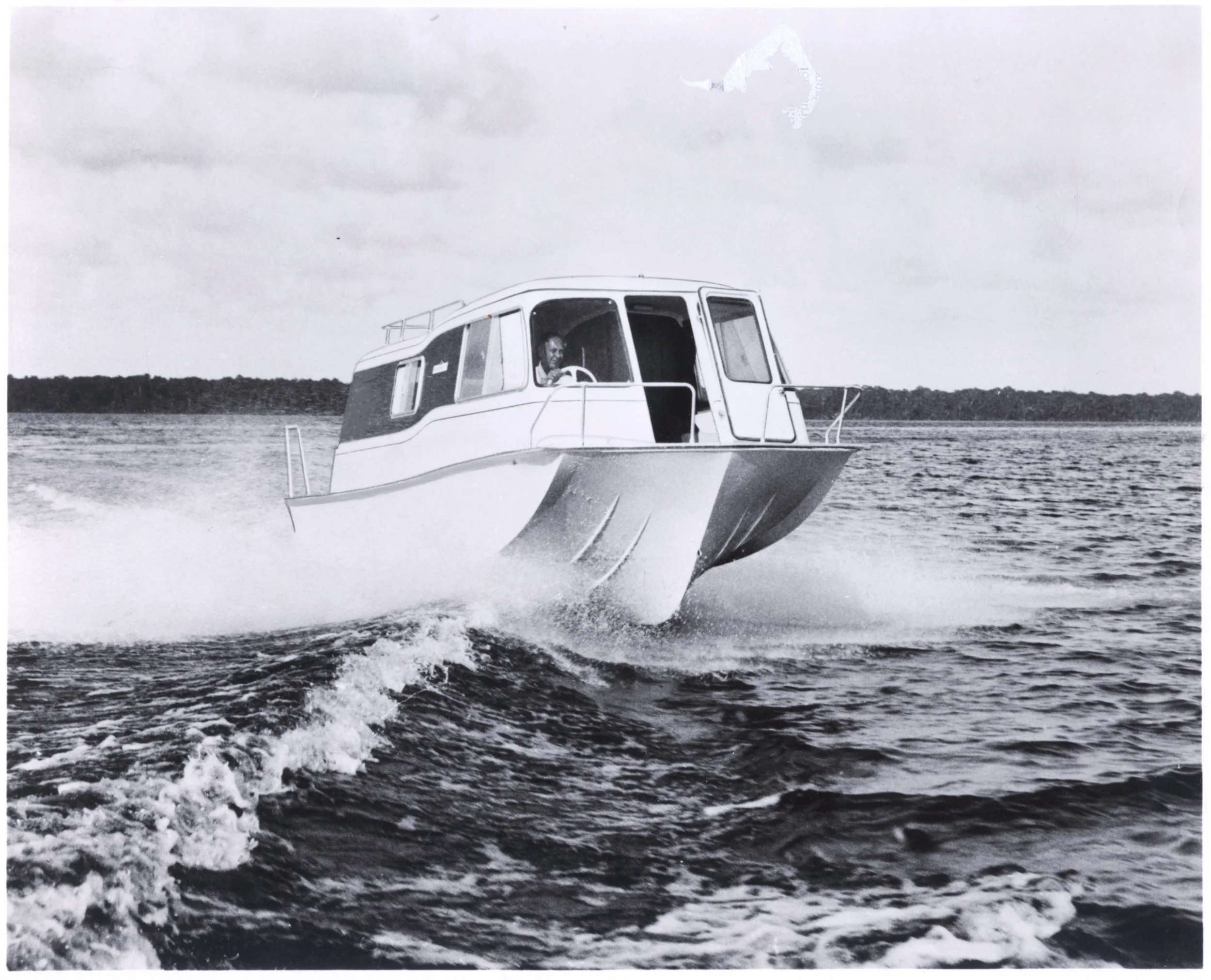
This original marine survey report dates back to the 1970s and was commissioned by the SeaCamper manufacturer, Borum Boats. SeaCampers were designed for coastal cruising and tested in the Atlantic Ocean. One of the SeaCamper’s most interesting features is the impressive 22-degree deadrise Tri-V hull design, which should not be confused with a traditional tri-hull. The SeaCamper's deep-V design was engineered for handling chip, and rougher water while maintaining stability and performance. The report provides insight into the boat's original construction, engineering, and capabilities, and we're sharing it as a resource for anyone interested in learning more about these unique boats.
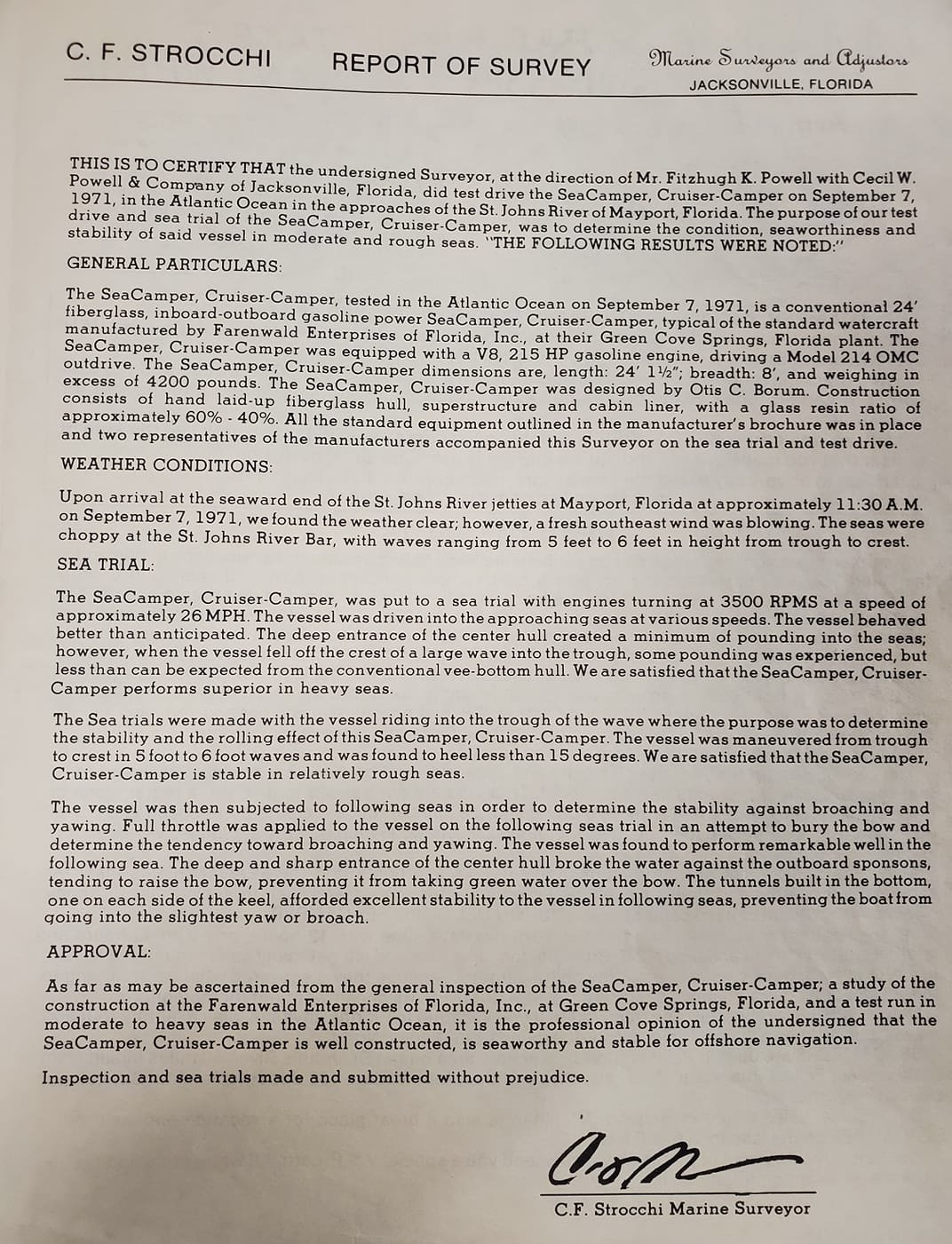
SeaCamper Boat Survey Report
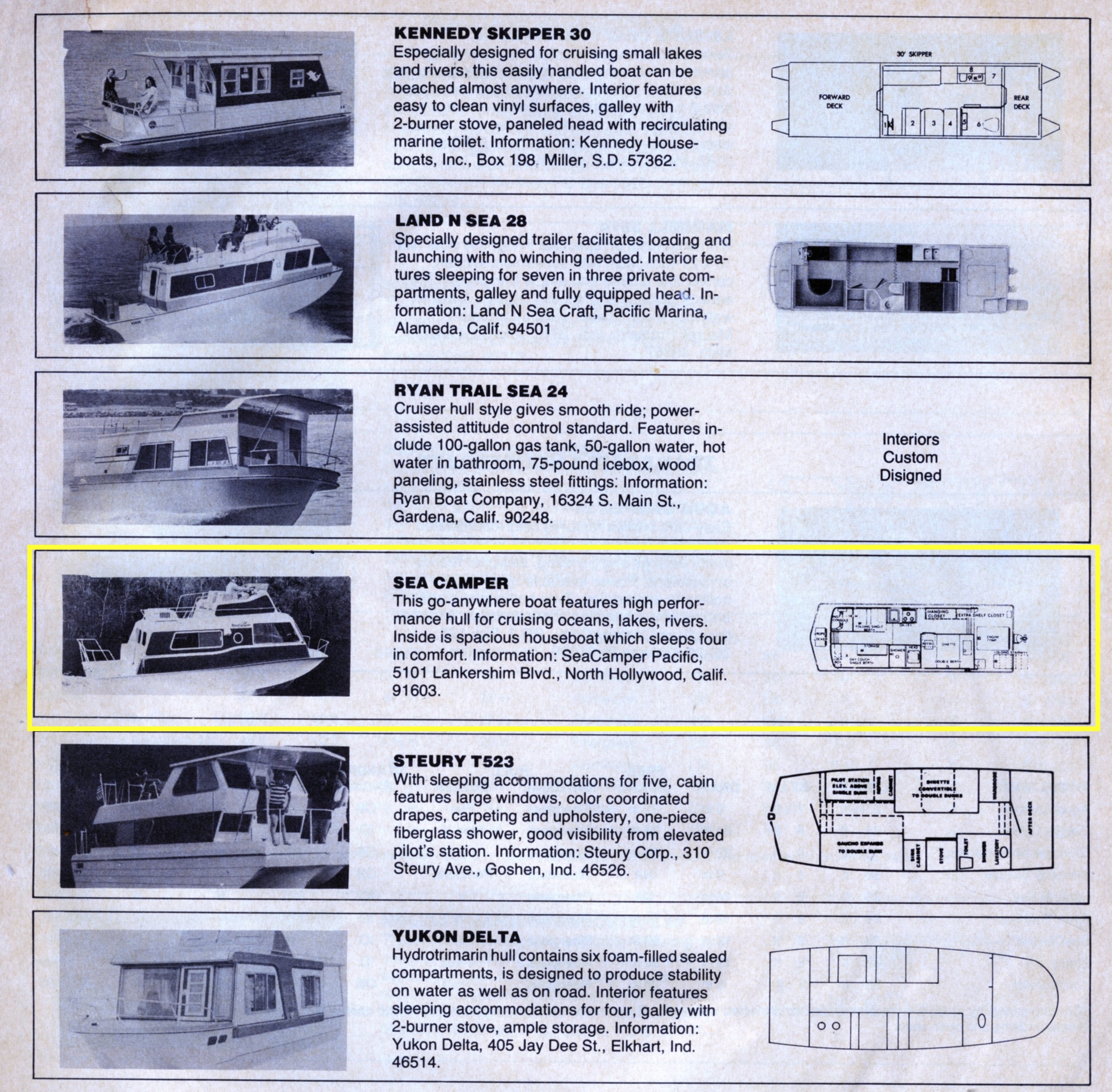
SeaCamper Boat Details and Info
The SeaCamper's hull design is much more sophisticated than its unconventional appearance might suggest. While the SeaCamper was designed to offer the versatility of both a camper and a cabin cruiser, its engineering was rooted in traditional powerboat design rather than the calm-water and slow-moving applications commonly associated with houseboats. In fact, Borum himself did not want the SeaCamper referred to as a houseboat, instead classifying it as a cabin cruiser.
This distinction is important in understanding the original intentions behind the SeaCamper's design and its capabilities as a coastal cruising vessel. The additional historical documents below offer a closer look at the engineering and design principles behind the SeaCamper's unique hull.
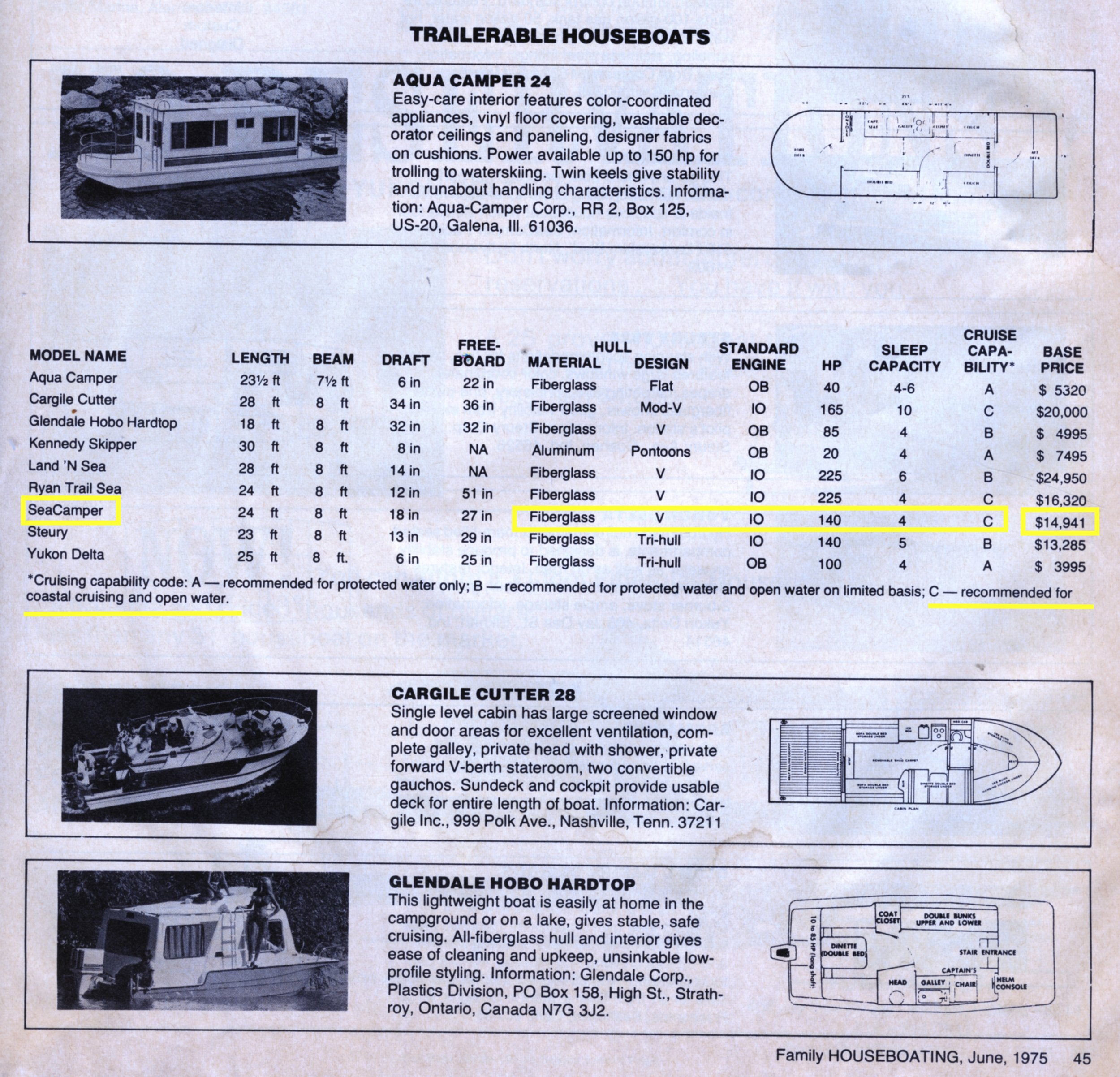
SeaCamper Boat Details and Info
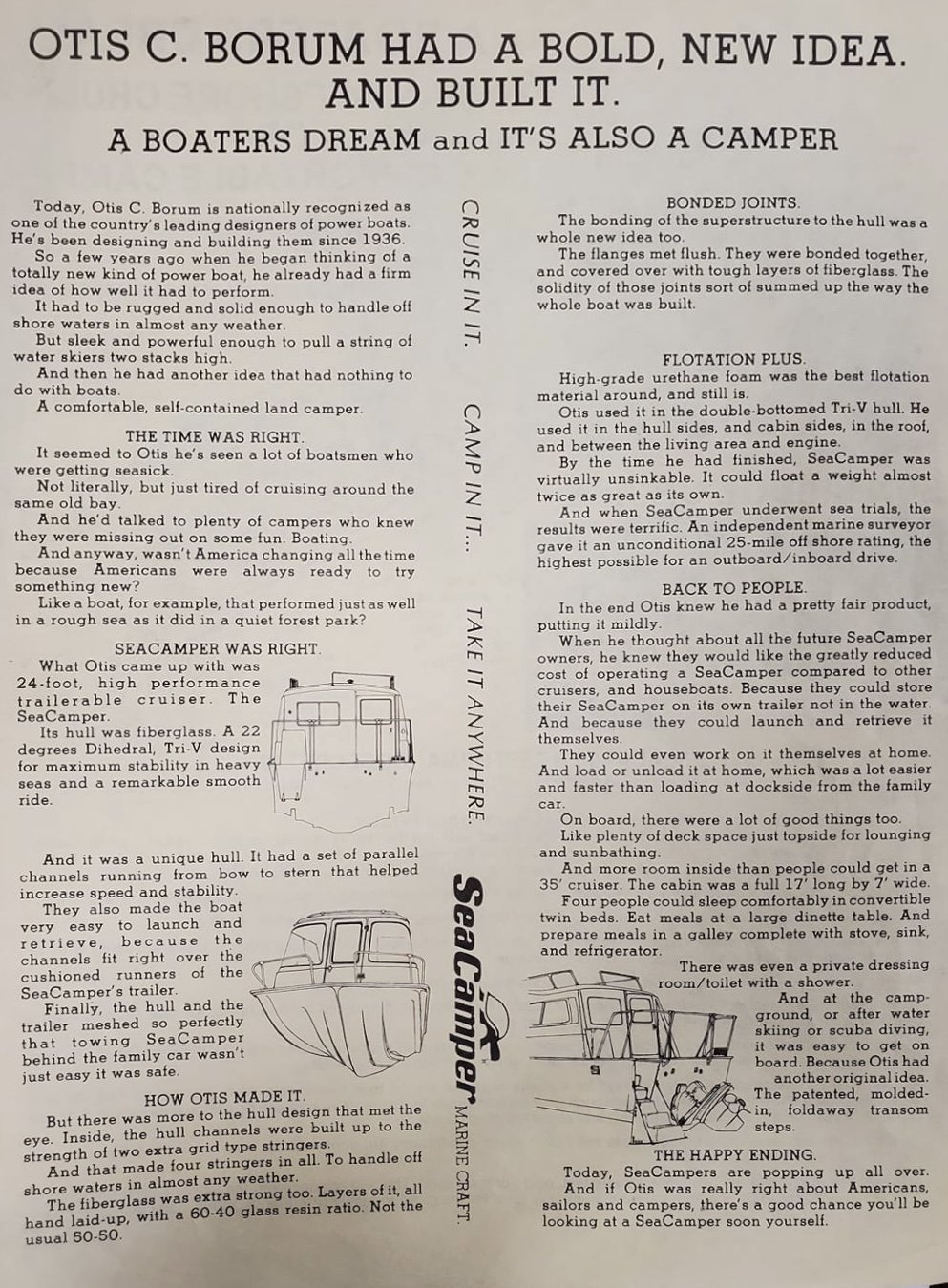
SeaCamper Hull Design
This original SeaCamper document explains some of the engineering behind its 22-degree dihedral Tri-V hull. Of particular interest is the description of the parallel channels running from bow to stern, which were designed to improve speed and stability. It also details the hull's internal construction, including four stringers, reinforced fiberglass, and urethane foam flotation. These details help explain what makes the SeaCamper's hull different from a conventional tri-hull.
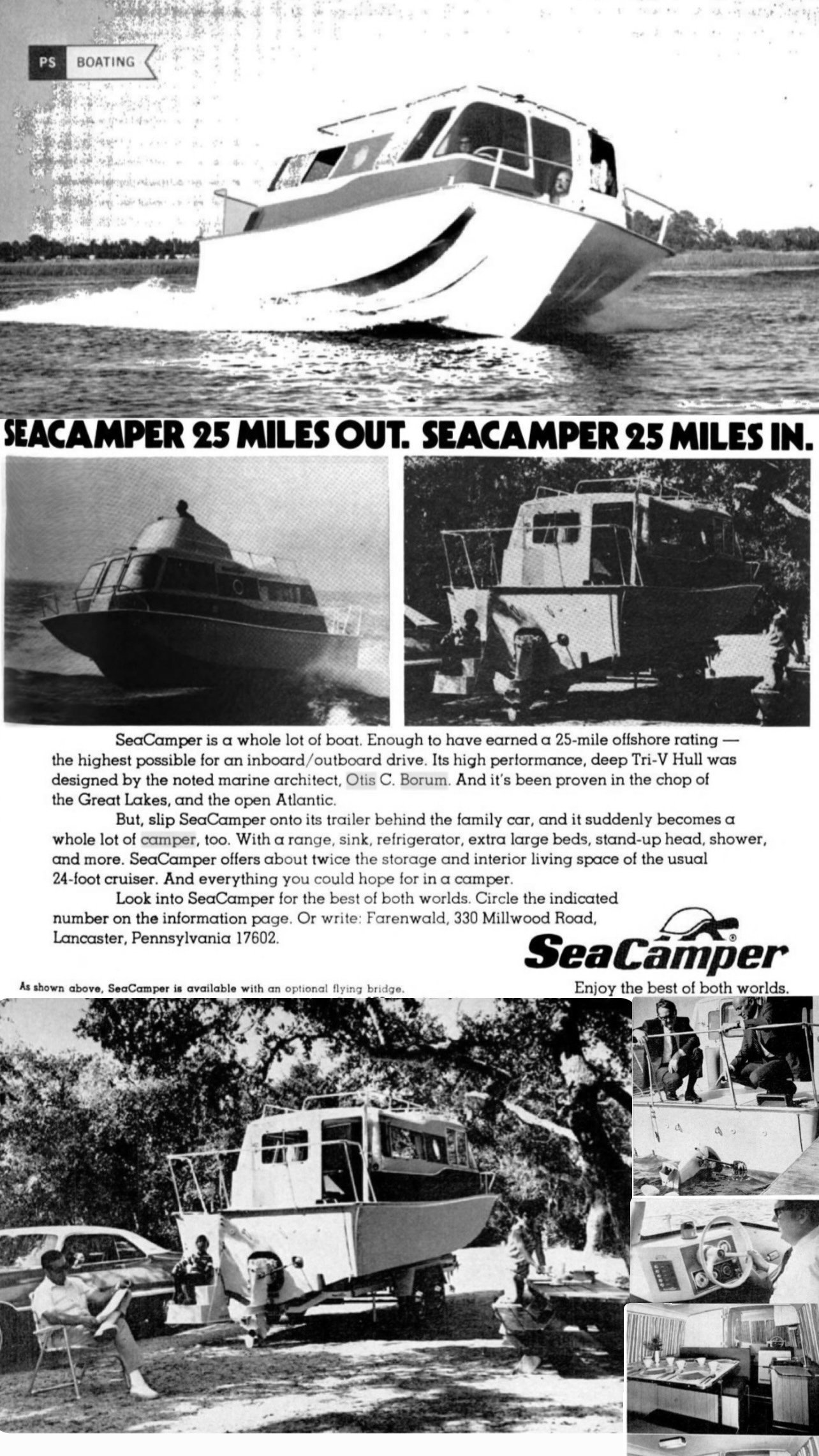
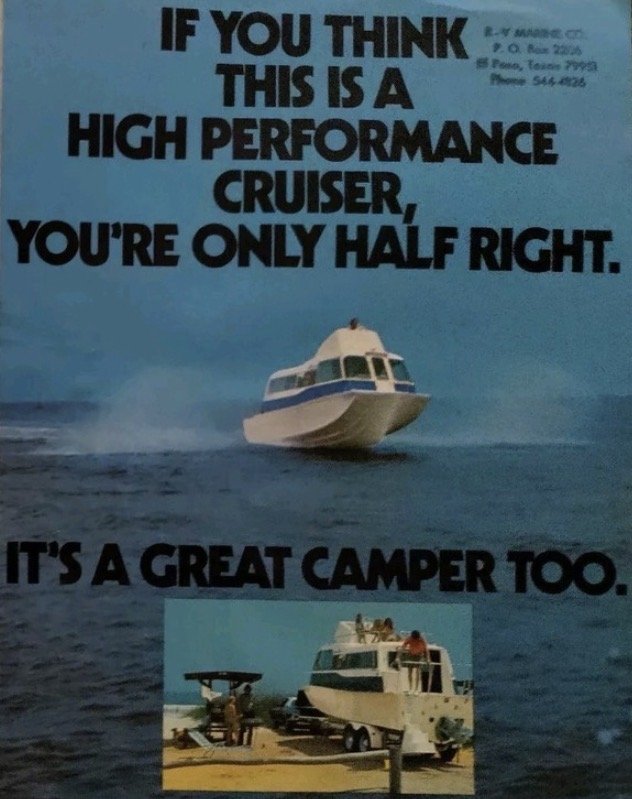
The SeaCamper's offshore capabilities were a major part of how the manufacturer originally presented these boats. This advertisement specifically references their proven performance in the Great Lakes and open Atlantic Ocean, along with an offshore rating described as the highest possible for an inboard/outboard drive at that time. The entire concept behind the SeaCamper was to give owners the freedom to explore different bodies of water without being tied to one location. Its trailerable design allowed owners to easily move between lakes, rivers, and coastal waterways, while its hull was engineered to handle conditions beyond protected inland waters. That combination of mobility and cruising capability was central to what makes the SeaCamper unique.
Original 1978 SeaCamper Specifications & Technical Details
The original SeaCamper specification sheet provides a detailed breakdown of the boat's dimensions, construction, equipment, and technical features as documented by the manufacturer. We've included it here as a reference for anyone researching SeaCamper boats, comparing original specifications, or working on a restoration of their own.
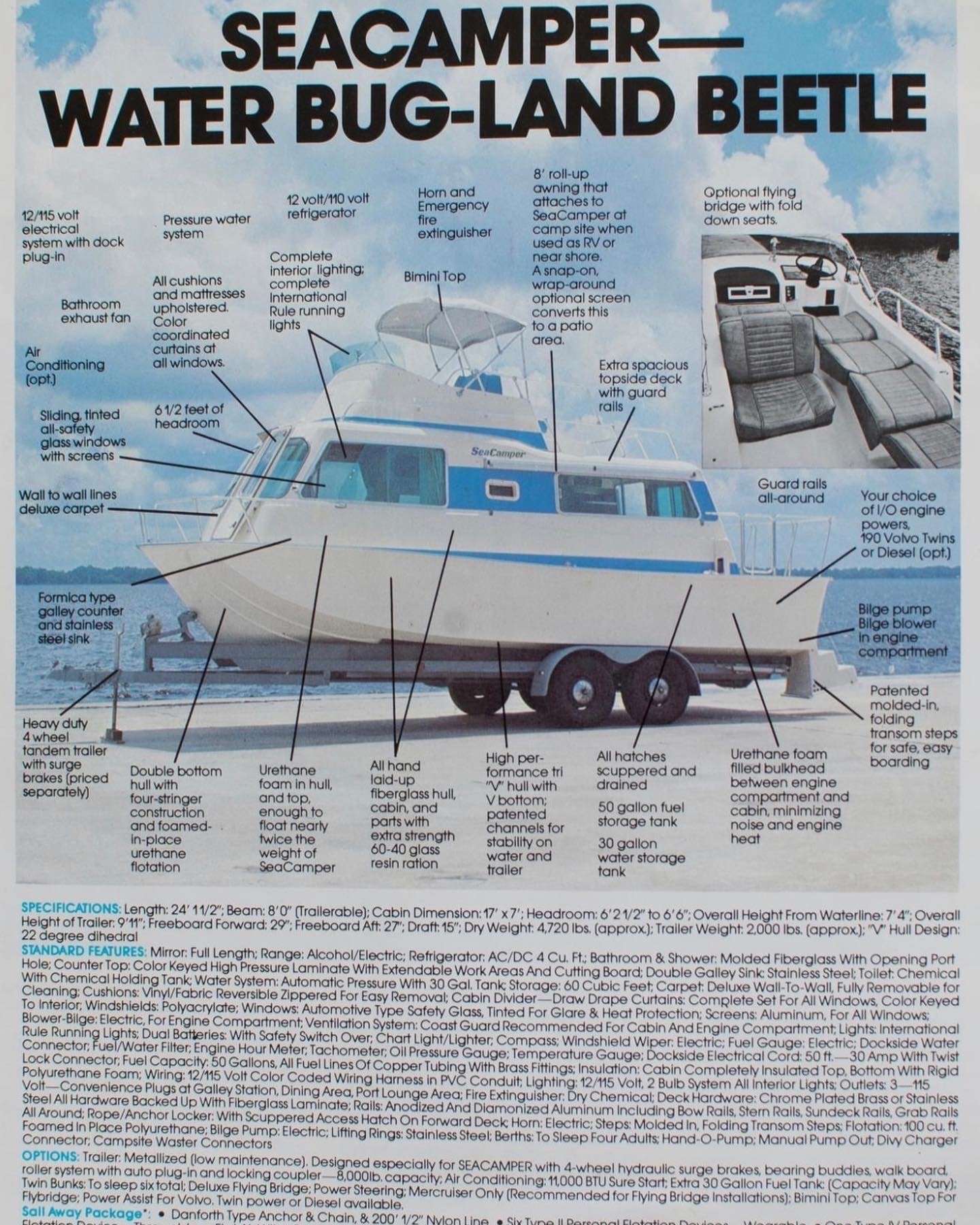
1978 SeaCamper SPec Sheet
The original SeaCamper specification sheet gives a detailed look at just how much engineering and functionality went into these 24-foot cabin cruisers. Some of the more notable features include the 22-degree deep-V hull, four-stringer fiberglass construction, built-in urethane foam flotation, and a fully self-contained cabin with sleeping accommodations for four adults. The SeaCamper also featured a 12/115-volt electrical system, pressurized freshwater, a complete galley, and an optional flying bridge. All of this was packaged into an 8-foot-wide, trailerable boat designed to be equally practical on the water and at a campsite.
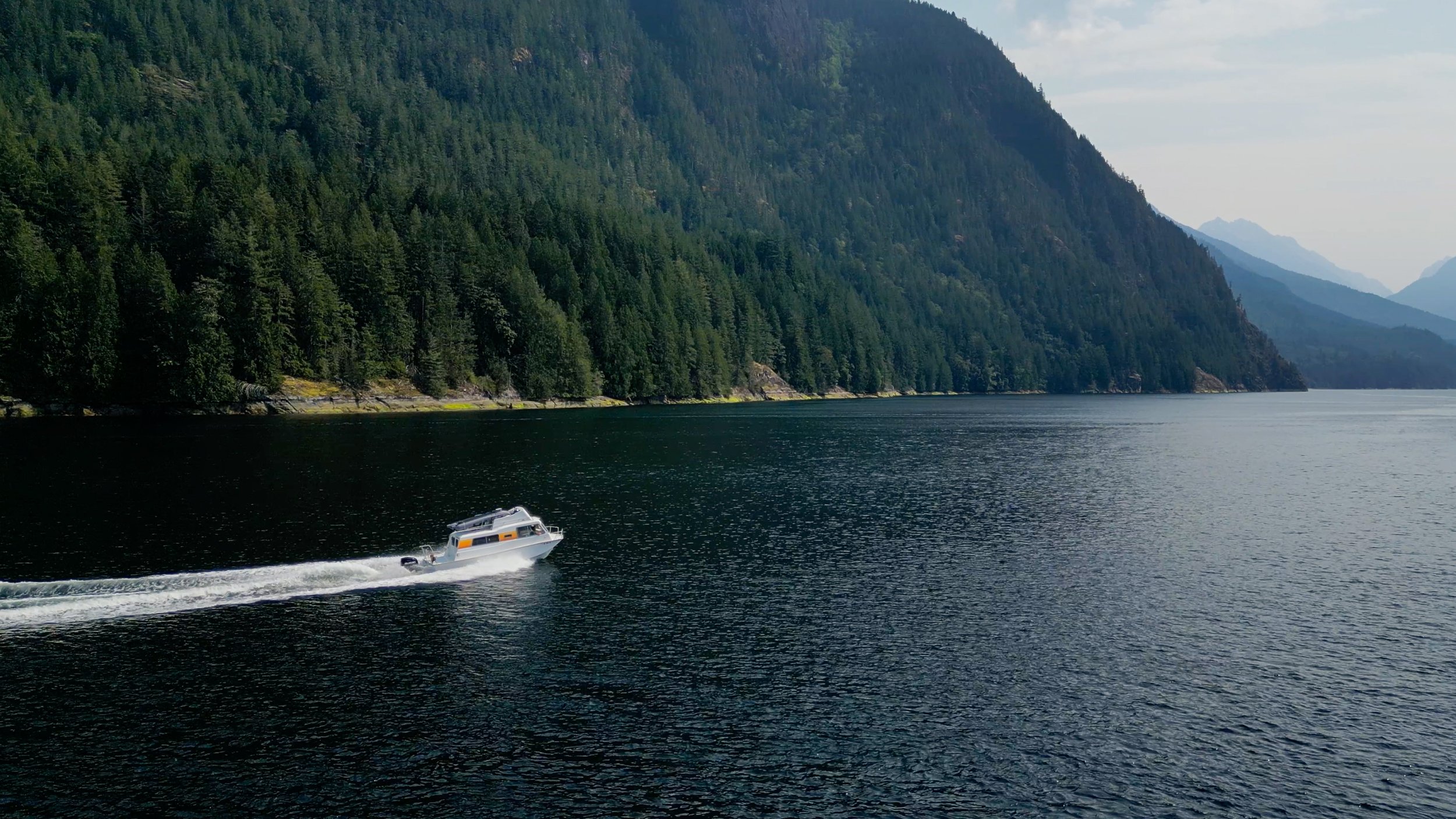
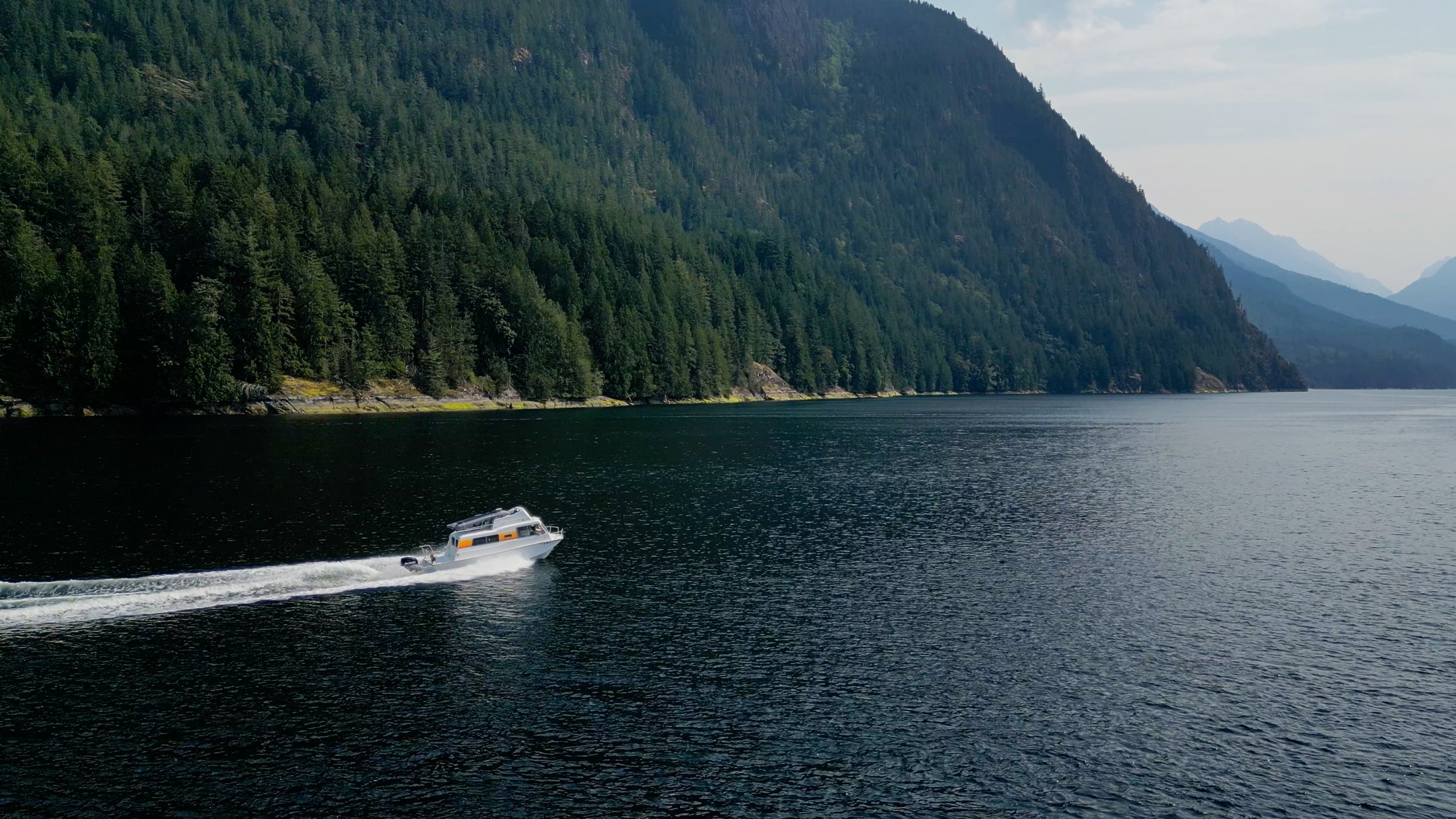
Since completing the restoration of our 1978 SeaCamper in 2025, we've traveled tens of thousands of miles across North America, towing our boat from the Florida Keys to Alaska and exploring countless waterways along the way. We've cruised the Atlantic and Pacific coasts, navigated remote fjords in British Columbia and Alaska, and explored lakes, rivers, and coastal waters throughout the United States and Canada. We've been living and traveling full-time in our SeaCamper for over a year now, putting its unique design and versatility to use in the way it was originally intended.
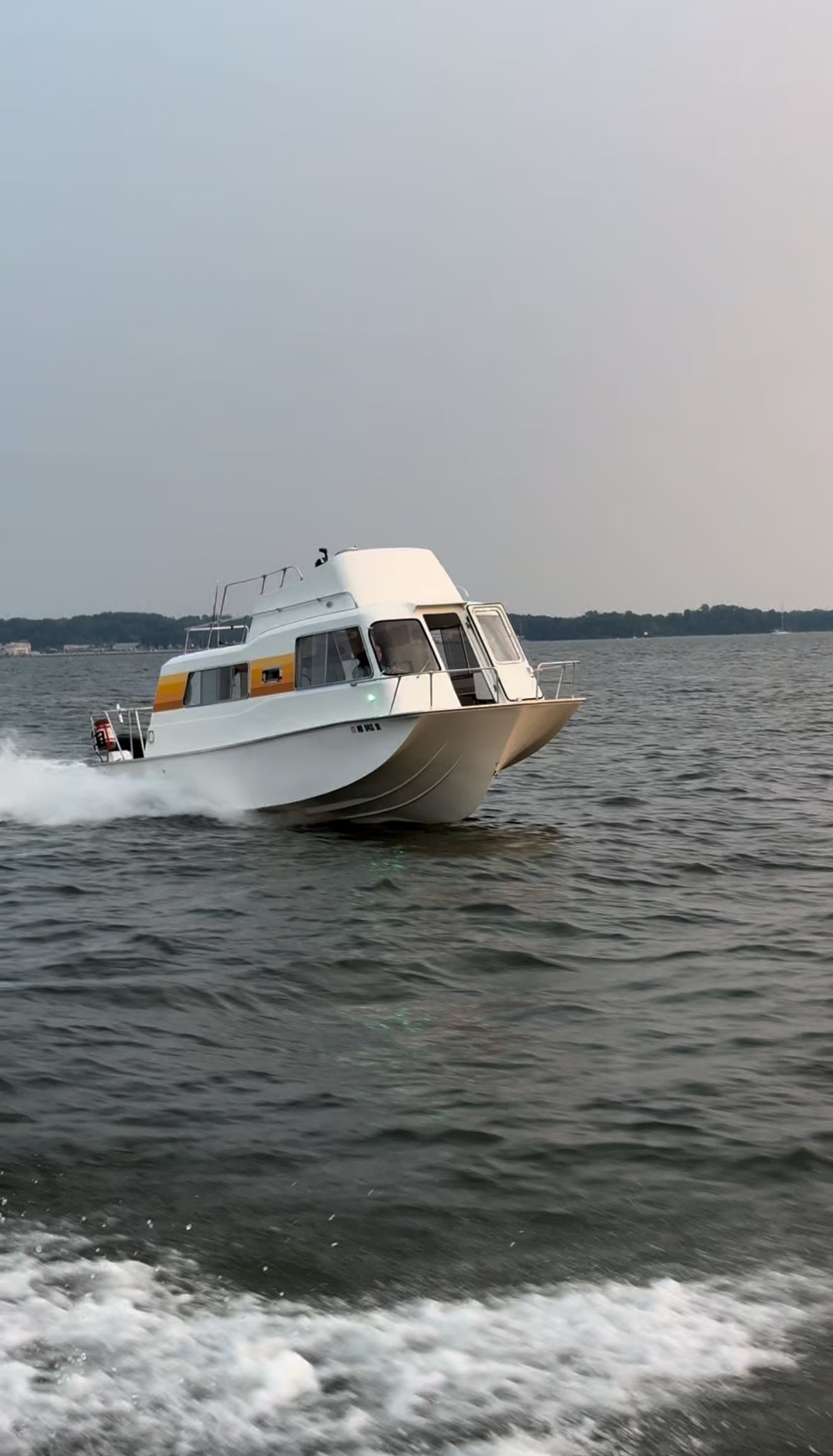
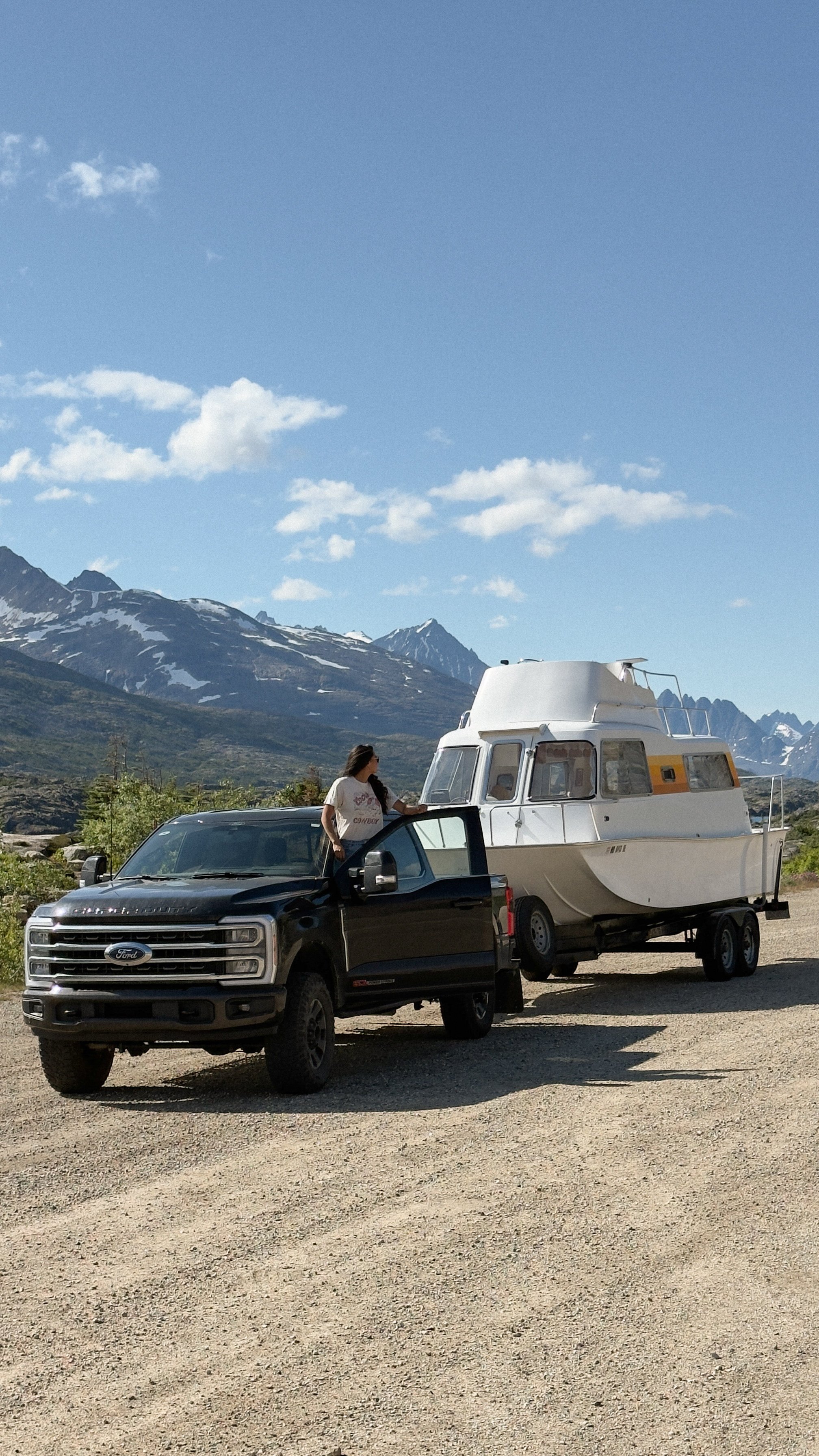
To learn more about our 1978 SeaCamper check out our YouTube channel with
detailed videos of adventures in our 1978 SeaCamper!
1978 SeaCamper cruising in remote British Columbia to reach Princess Louisa Inlet